Bulkhead Planning Across Lakes, Rivers, Bays, and Gulf Coast Properties
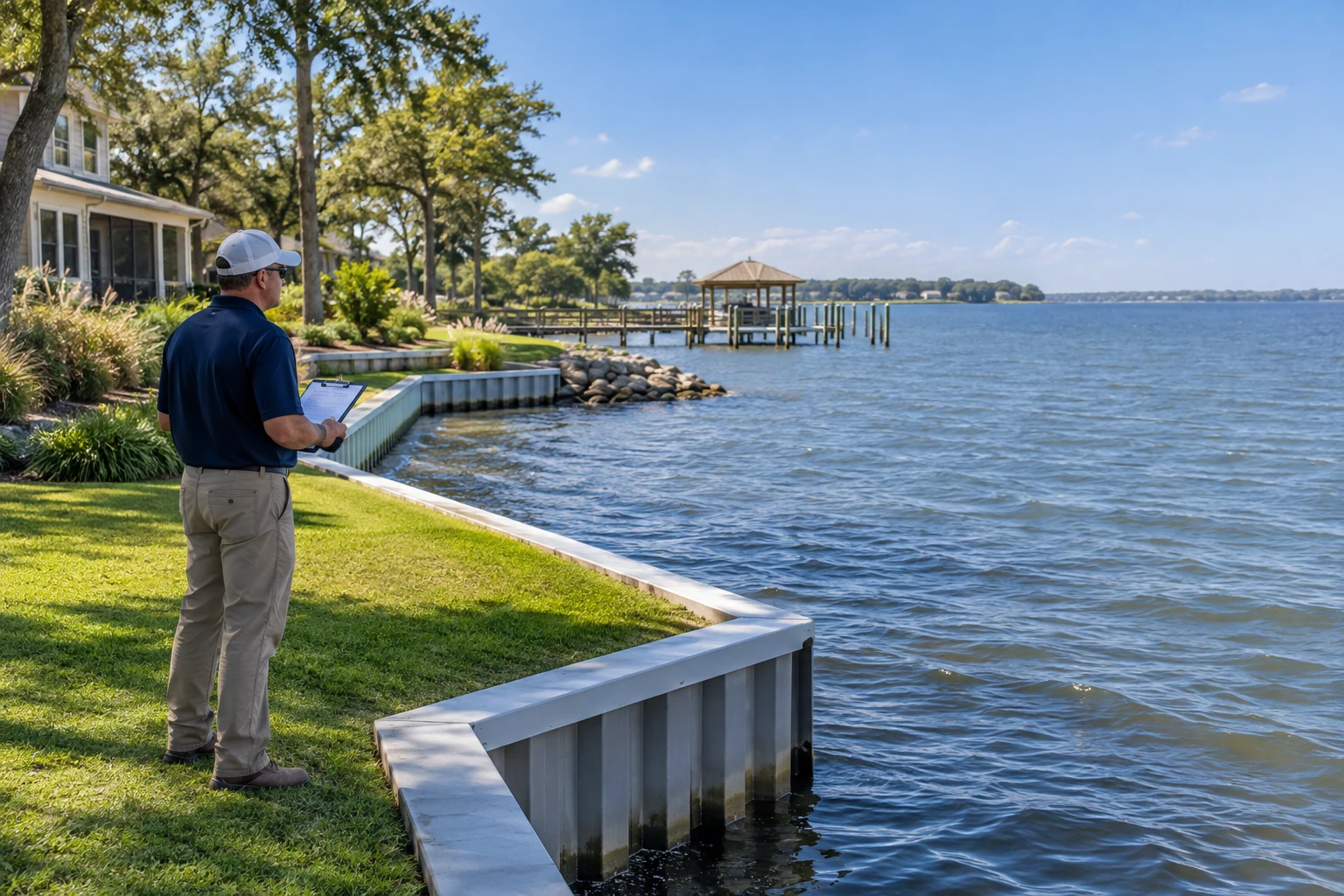
Bulkhead construction serves a wide range of shorelines, but the same wall should not be copied from one water body to another without reviewing the site. Shore Protect Team works across inland lakes, rivers, bays, tidal areas, and Gulf Coast communities in Texas, Louisiana, Oklahoma, Arkansas, Mississippi, and Alabama.
The company’s regional waterfront construction services includes bulkheads as part of a broader marine construction service across those six states. The common service does not mean the conditions are common. Freshwater, river currents, tidal movement, open shoreline waves, and hurricane exposure create different planning priorities.
On calm inland lakes and rivers, treated wood is positioned as an optimal bulkhead material when the owner accepts maintenance. Vinyl is described as suitable for all types of water bodies where low maintenance is important.
In more demanding coastal settings, reinforced concrete is associated with Gulf Coast and hurricane-zone properties. Riprap is linked to aggressive waves and active erosion, while gabions provide natural drainage and structural flexibility.
Regional planning also has to account for soil. The service page states that soil characteristics determine pile depth and the need for reinforcement, with soft soils requiring deeper piles. That factor can vary even within the same state or water body.
The bulkhead service information by condition therefore applies one site-based decision process across different regions: assess water, soil, exposure, length, drainage, anchors, access, and maintenance before selecting the final system.
Inland freshwater properties create one set of priorities
Freshwater lakes and rivers often place more emphasis on calm-water material options and residential use. Wood is specifically positioned for these settings, while vinyl can be considered where the owner wants lower routine maintenance.
That does not eliminate foundation requirements. Soil conditions, wall height, groundwater, and equipment access still affect the installation.
Rivers add current and changing shoreline conditions
River properties should be assessed for currents, water-level behavior, soil, and erosion rather than treated as identical to lakes. The service page lists rivers among the environments where Shore Protect Team builds and repairs bulkheads.
The correct material and reinforcement depend on the actual river setting, not the label „riverfront” by itself.
Bays and Gulf Coast properties raise the exposure question
Tidal zones and open shoreline areas with wave action require reinforced solutions according to the FAQ. Gulf Coast and hurricane-zone properties are the settings where concrete is most strongly positioned.
Riprap can also become relevant where aggressive waves and active erosion are the main problems, while gabions may fit sites where natural drainage and flexibility matter.
- Texas – Includes Greater Houston waterfront areas, inland lakes, rivers, bays, and Gulf Coast properties.
- Louisiana – Includes river communities, lakefront areas, tidal zones, and Gulf Coast settings.
- Oklahoma – Service includes freshwater lake communities.
- Arkansas – Service includes lakes and river areas.
- Mississippi – Includes Gulf Coast and inland waterfront properties.
- Alabama – Includes lake areas and coastal communities.
Regional labels should not replace property assessment
Two properties in the same state can require different bulkheads because their soil, water level, wave load, and access are different. Likewise, two Gulf Coast properties can have very different exposure if one sits on protected water and another faces open wave action.
The value of regional experience is the ability to recognize these differences, not to assign one material to an entire state.
- Identify the exact water body and shoreline setting.
- Assess water level, currents, waves, and erosion exposure.
- Review soil type for pile depth and reinforcement.
- Choose among wood, vinyl, concrete, riprap, and gabions according to the site.
- Plan drainage and tie-back anchors where required.
- Include access and shoreline length in the estimate before comparing prices.
One decision framework can serve many regions
Bulkhead planning across six states becomes manageable when the same questions are applied to every property. What water conditions act on the wall? What soil supports and pushes against it? How high is the retained shoreline? How will groundwater be drained? How will equipment reach the work?
Once those questions are answered, the regional setting becomes useful context instead of a shortcut. The selected bulkhead can then match the actual lake, river, bay, or coastal property rather than a broad geographic assumption.
Service-area experience should be used as context, not a shortcut
Working across several states exposes a contractor to different combinations of freshwater, river, bay, tidal, and Gulf Coast conditions. That experience can help frame the questions asked during assessment, but the final bulkhead still has to be designed for the individual property.
This is particularly important in broad regions such as Texas, where inland lakes, rivers, Greater Houston waterways, bays, and Gulf Coast properties can all fall within the same service area. A state name alone cannot determine the material or reinforcement requirements.
Owners can use regional information to prepare for the site review, then return to property-specific evidence. Soil, water level, wave load, wall height, drainage, anchors, access, and maintenance remain the practical variables that convert regional experience into a usable project scope.
Regional service does not mean identical material availability or site conditions
The bulkhead page lists the same core material categories across the service area, but the practical choice changes with freshwater, tidal, coastal, soil, and access conditions. Owners should therefore use the regional list to confirm coverage, then rely on the property assessment to determine the actual wall system.
Climate exposure should be discussed without assuming every coastal site is the same
Hurricane-zone conditions can make concrete more relevant, while protected coastal waters may lead to a different comparison. The service page provides broad guidance, but the project still depends on the exposure of the exact shoreline. Regional labels are useful context only when tied back to site-specific evidence.




Opublikuj komentarz