Self-Study, Apps, or Structured School? Breaking Down the Real Options for Learning Polish
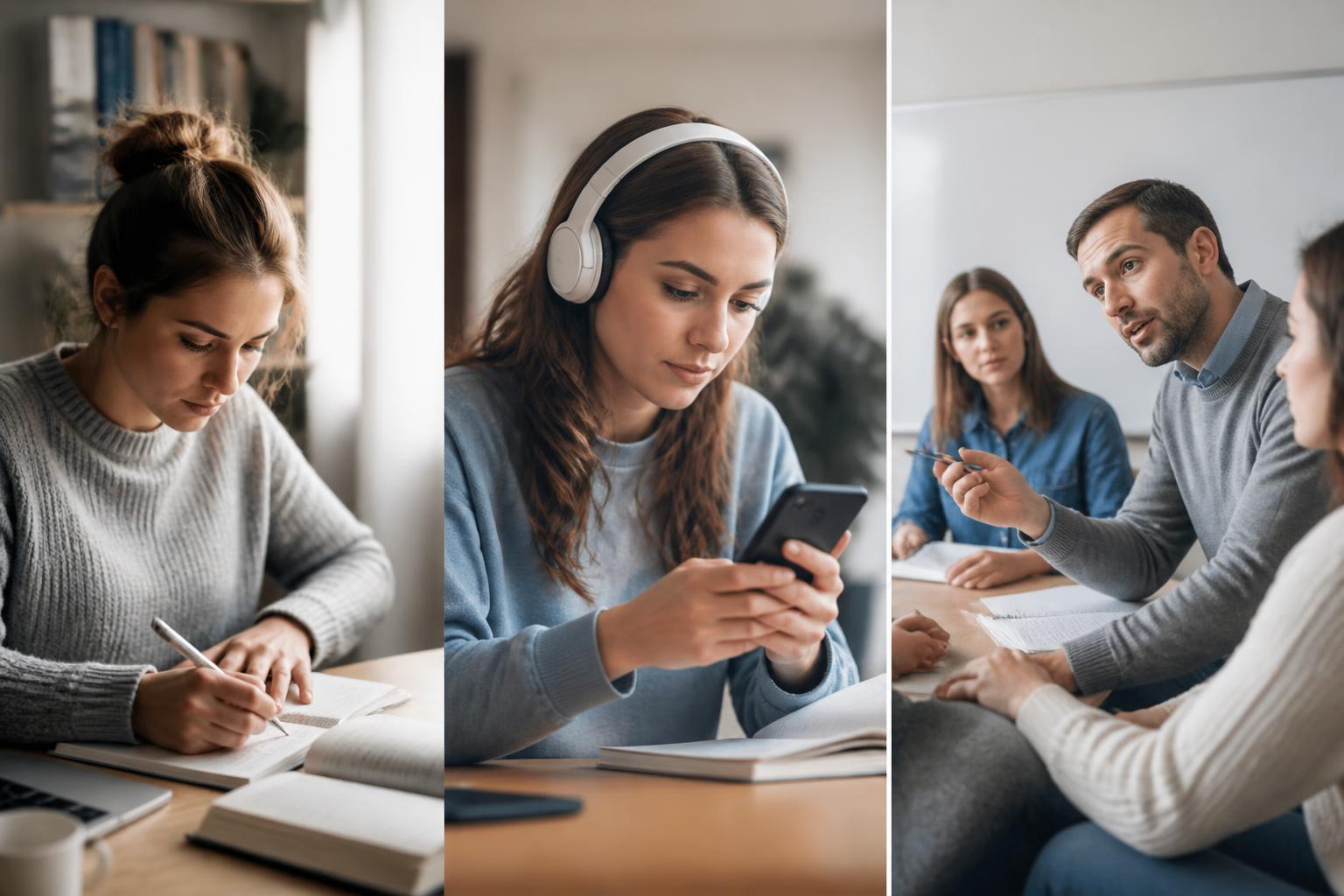
Self-Study, Apps, or Structured School? Breaking Down the Real Options for Learning Polish
Before spending a single hour — or a single hryvnia — on Polish language learning, most people face the same dilemma: which path actually delivers results? In 2026, the options have multiplied dramatically. Language apps promise fluency in minutes. YouTube channels offer free grammar breakdowns.
AI tutors claim to replace human teachers. And traditional language schools still stand firm, backed by decades of pedagogy. So how do you cut through the noise and make a rational choice?
This article runs a direct comparison across the three main learning routes — self-study tools, digital platforms, and institutional courses — using real criteria like time investment, cost, measurable outcomes, and learner retention rates.
What Self-Study Tools Actually Deliver (and Where They Fall Short)
Apps like Duolingo, Babbel, and Pimsleur have built enormous user bases by making language exposure frictionless. For Polish specifically, they can be useful for building early vocabulary and getting familiar with pronunciation. But the data from 2026 learner surveys tells a more complicated
story.
Learners who relied exclusively on apps for Polish showed the following patterns:
-
High dropout rates after the A1 level, typically within the first 60 days
-
Difficulty forming grammatically correct sentences in real conversation
-
Strong passive recognition but weak active production skills
-
No structured path toward recognized certification (TELC, B1/B2 state exams)
Polish is a particularly poor candidate for app-only learning. Its seven grammatical cases, complex consonant clusters, and gendered noun system require systematic explanation — not gamified repetition. Apps treat Polish like Spanish or Italian. It isn’t.
Online Platforms vs. In-Person Instruction: A Measurable Divide
The Flexibility Trap
Online platforms — including pre-recorded video courses and freelance tutor marketplaces — offer genuine flexibility. For working professionals or people in smaller cities across Ukraine, this is real value. However, flexibility often becomes a liability. Without scheduled accountability, course
completion rates on self-paced platforms average below 15% for Slavic languages in 2026, according to EdTech industry analysis.
The core problem isn’t motivation — it’s structure. Polish grammar cannot be learned in any order. The accusative case must precede the instrumental. Verb aspect pairs (perfective/imperfective) require a foundation of basic conjugation. When learners jump around or skip uncomfortable lessons, gaps
compound quickly.
Where Structured Institutional Courses Change the Equation
Institutional language schools offer something neither apps nor freelance tutors typically can: a sequenced curriculum built specifically around how Polish is actually acquired, not how it’s most conveniently taught. If you decide to
learn polish language through Instytut Językowy, you enter a program where each module is pedagogically linked to the next — ensuring that intermediate learners don’t carry A1-level misconceptions into B1 coursework.
This matters more for Polish than for most European languages. A single misunderstood rule about noun declension, left uncorrected, can make an entire register of speech incomprehensible to native speakers.
Cost Comparison: What You Actually Pay Per Outcome
Raw pricing comparisons between apps and schools often mislead. A subscription app might cost ₴300 per month — but if it delivers A1 competency over 12 months, the cost per language level is ₴3,600. A structured group course at a qualified school that brings a learner from A1 to B1 in the same
timeframe may cost more upfront but achieves three levels in equivalent or less time.
The more honest metric is cost per verified outcome. Certification-ready learners who complete institutional courses in 2026 report significantly higher exam pass rates than those combining self-study with occasional tutoring. For learners targeting employment in EU markets, Poland’s public
sector, or international organizations, certification isn’t optional — making structured school enrollment the more economical long-term choice.
The Conversational Fluency Variable — Often Ignored, Always Critical
Technical grammar knowledge and actual communicative ability are not the same thing. Many learners who complete rigorous self-study programs can pass written grammar tests but freeze entirely in real dialogue. Polish conversation involves rapid case shifts, colloquial contractions, and regional
vocabulary — elements that only live interaction can train effectively.
This is precisely why enrollment in a conversational polish class addresses a gap that no app or grammar workbook can fill. Structured conversational practice with trained instructors simulates authentic dialogue scenarios — job
interviews, formal negotiations, casual social exchanges — under conditions that build reflex rather than just recall.
In 2026, employers in Poland and across EU markets increasingly include spoken language assessments in hiring processes. Candidates who have only learned from text-based tools consistently underperform compared to those who have trained oral production in structured environments.
The Verdict: Matching Learning Method to Learning Goal
The right approach depends entirely on what you need Polish to do for you. If the goal is casual travel phrases or basic cultural curiosity, apps may suffice. But for anyone pursuing professional integration, academic enrollment, or certified language credentials, the comparison becomes stark:
structured institutional programs outperform self-study and freelance tutoring on every metric that matters — retention, certification pass rates, and real-world communicative competence.
Polish is a high-investment language with high-return potential across the EU job market in 2026. The question isn’t whether to invest — it’s whether to invest wisely from the start or spend twice as long correcting the gaps that undisciplined learning inevitably creates.




Opublikuj komentarz