Why a VIN Check Is Essential Before Buying from Copart or IAAI
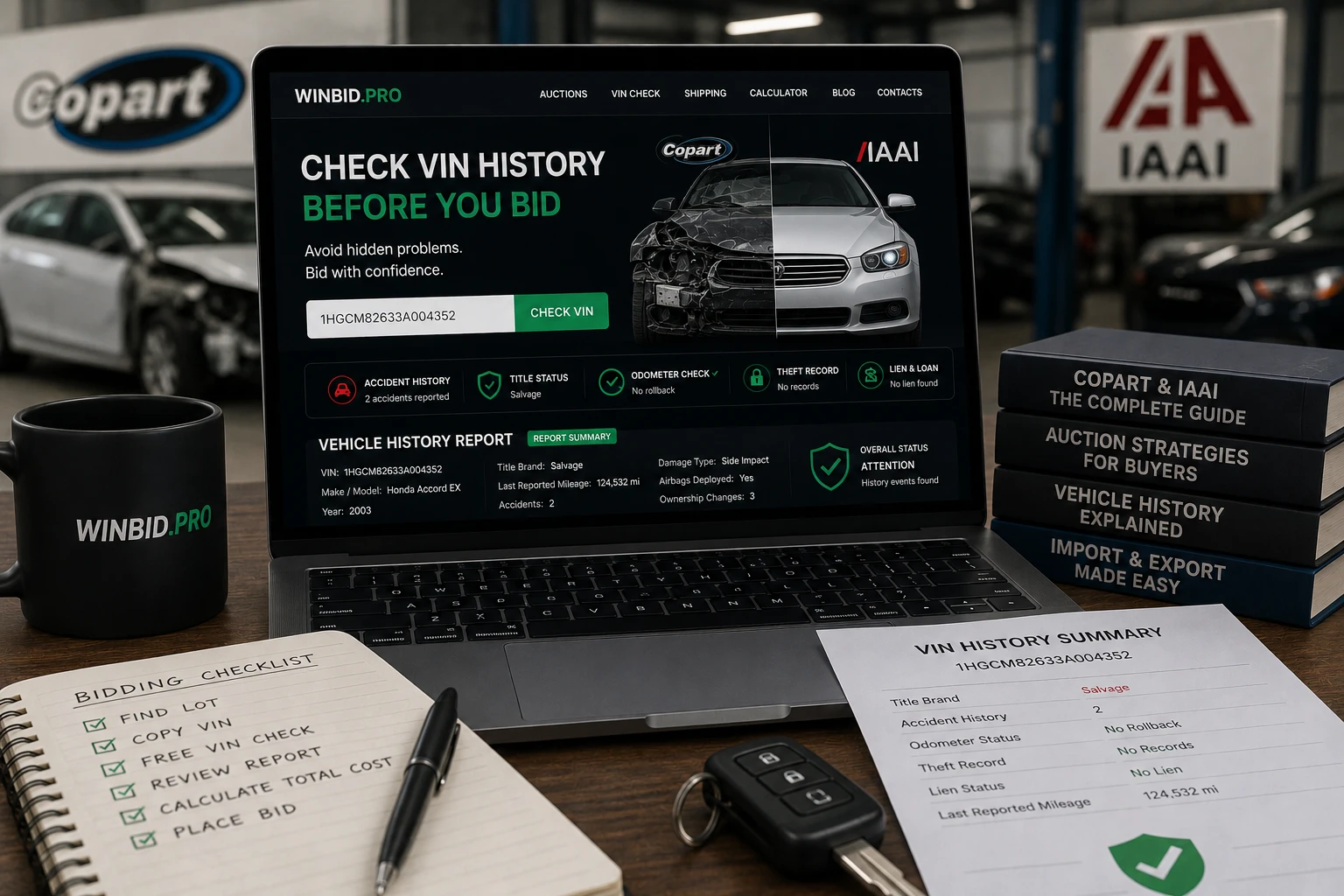
Buying a car from Copart or IAAI can save you thousands, but only if you know the true history of the vehicle. Auction photos and damage codes are not enough — they often hide the real story.
That is where winbid helps. It provides complete vehicle history by VIN: past accidents, title status, odometer readings, theft records, and liens. Without such a check, you are bidding blind.
What Auction Reports Don’t Show You
Copart and IAAI give you basic information: a few photos and a primary damage code (e.g., FRONT END or WATER/FLOOD). But this is not enough to know:
- Has the car been in a serious accident before the auction?
- Is the odometer rolled back?
- Does it have a Salvage or Rebuilt title?
- Is it stolen or under a lien?
All this data is only available in a full VIN history report. Without it, you are gambling.
How a Free VIN Check Saves You from Costly Mistakes
Many beginners think: „The price is low, so I can afford the risk.” But in reality, hidden problems cost thousands of dollars in extra repairs and legal issues.
For example, a car with a WATER/FLOOD code might look dry in photos, but a month after purchase, all electronics can fail. Or a Salvage title can make registration impossible in your country.
To avoid such traps, simply perform a free vin check before placing any bid. It takes a few minutes but protects you from financial disaster. You will see the full history: all accidents, ownership changes, legal restrictions.
What You Learn from a Complete VIN Report
A professional VIN check gives you access to data from insurance companies, police records, and government registries. You will get:
- Title brand: Clean, Salvage, Rebuilt, Flood, Hail, etc.
- Accident history: Dates, damage type, airbag deployment.
- Odometer readings: Check for rollback or replacement.
- Service and maintenance records: When and where work was done.
- Legal marks: Theft, lien, lease history.
It is especially important to check if the car was sold at auction before and why. If a previous buyer returned the lot after inspection, that is a serious red flag.
Real-World Example
A buyer found a car on Copart with a FRONT END code. Photos showed only a damaged bumper and headlight. The price looked attractive. But after a copart vin check, it turned out that three years earlier, the same car was sold with a Salvage title after a severe side impact. It had been poorly repaired, and the current auction report hid that history. The buyer walked away and saved over $5,000 in hidden problems.
How to Integrate VIN Checking into Your Bidding Process
To avoid missing good deals and overpaying, follow this simple workflow:
- Find an interesting lot on Copart or IAAI.
- Copy the VIN from the description.
- Run a free vin check using a specialized service.
- Study the full report: title status, accident history, odometer.
- If everything is clean, calculate total cost (bid + fees + shipping + customs + repairs).
- If the report shows hidden issues, skip the lot and continue searching.
This process turns auction buying from a lottery into a predictable investment.
Conclusion
Thousands of cars are sold on Copart and IAAI every day, but not every one is worth your money. The biggest mistake is trusting only what the auction shows. The true history of a vehicle is often deeper and more troubling.
That is why, before every bid, you should perform a copart vin check. It is a small time investment that pays back hundreds or thousands of dollars in savings. Use reliable services, gather complete data, and bid with confidence. Then auctions will become a source of great deals, not disappointments.




Opublikuj komentarz